Pearls
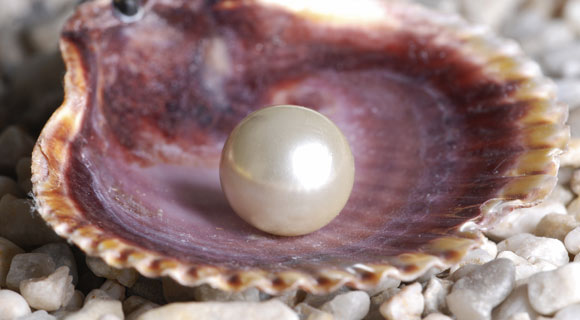
While most precious gemstones are mined from deep within the layers of the Earth’s crust, pearls are formed by living organisms. These unique organic gems are created when an object, such as a shell bead, is embedded inside an oyster. The oyster covers the object with a naturally iridescent substance called nacre, which produces a smooth, visually appealing outer casing.
Although pearls are most commonly associated with the classic, creamy-white coloration, there is actually a wide range of different shades and varieties available. Renowned for their luster and smoothness, pearls elicit a timeless elegance that makes them a popular choice for gift-giving. At Brilliance, we offer a premier assortment of cultured pearls set in studs, necklaces, bracelets, and solitaire pendants, appropriate for formal events as well as everyday wear.
Pearl Quality
All natural pearls are coated by a resilient, organic material called nacre, the same substance that’s used to create the shell of its parent oyster. It’s the nacre that determines the color of a pearl.
Pearl Colors
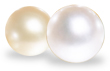
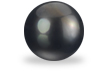
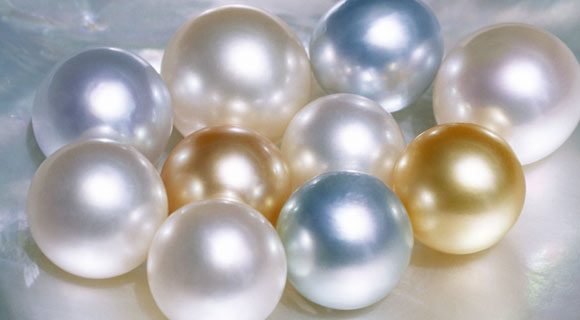
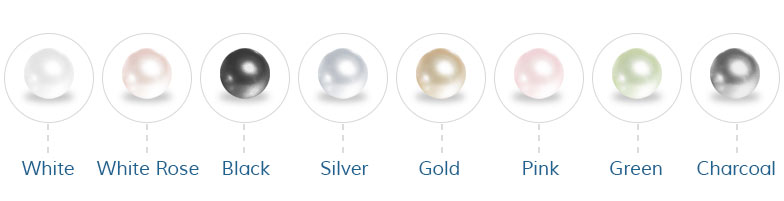
All natural pearls are coated by a resilient, organic material called nacre, the same substance that’s used to create the shell of its parent oyster. It’s the nacre that determines the color of a pearl. Although most commonly associated with the classic white coloration, pearls are also found in a rich medley of shades, including yellow, pink, silver, green, and black. Many pearls exhibit a combination of multiple shades when viewed in certain lighting. The main color is referred to as the “body color” (classified as either a cool or warm hue), while the secondary shade is called the “overtone.”
Pearl Shape
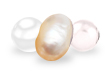
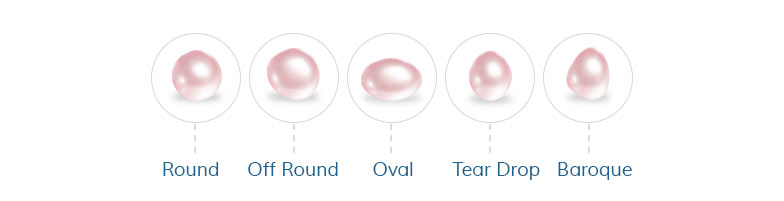
By far, the most sought after and valued of all pearl shapes is the round variety. A smooth, spherical pearl with good symmetry and a shimmering luster will command the highest price. This water-grown gemstone can take on a variety of other forms, including semi-round, oval, teardrop, and semi-baroque; although these variations can be quite beautiful, they are generally regarded as less valuable than round stones. Saltwater pearls—Akoya, Tahitian, and South Sea—are usually more round and symmetrical than freshwater pearls.
Pearl Size
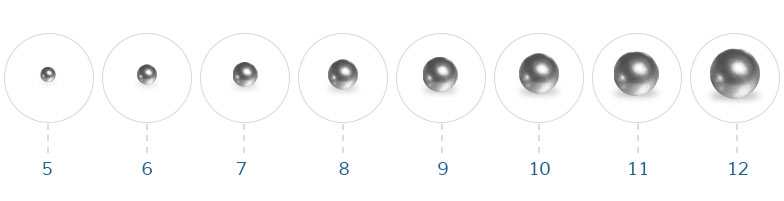
Another important consideration when determining the value of a pearl is its size. As is the case with most gemstones, larger pearls are generally more expensive than smaller ones. The millimeter is used as the standard unit of measurement for pearls, which can range from 2mm to 20mm. Many factors determine how small or large a pearl will be, including the size of its parent oyster, the size of the bead or particle at the core of the pearl, and the amount of time the oyster is allowed to remain immersed in water before the pearl is harvested from its shell. Freshwater pearls are generally the smallest variety. In the saltwater class, Akoyo pearls are typically more petite than Tahitian and South Sea pearls, which can measure up to 20mm.