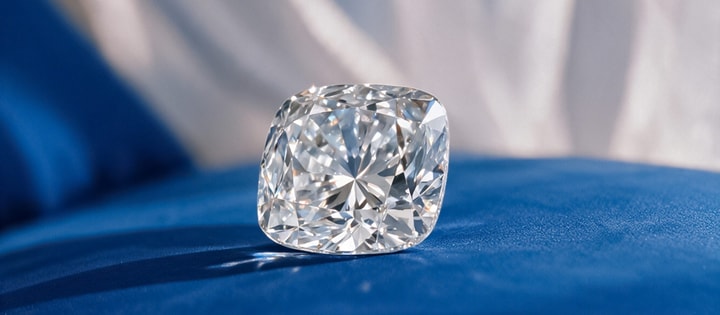
The elongated cushion cut has become one of the most requested fancy shapes for engagement rings, prized for its blend of vintage-inspired rounded corners and a modern, stretched-out silhouette. If you're comparing it to a standard cushion, an oval, or a radiant cut, this guide covers the shape's defining characteristics, how to read its proportions, what to look for in color and clarity, and which settings tend to complement it best.
What Is an Elongated Cushion Cut Diamond?
A cushion cut diamond has a square or rectangular outline with softly rounded corners, giving it a pillow-like shape. An elongated cushion cut is simply a cushion with a noticeably longer, more rectangular profile than a traditional square cushion, so it reads as more of a rectangle than a square when viewed from above.
The proportions of any fancy shape, including the cushion, are described using a length-to-width ratio, calculated by dividing the diamond's length by its width. This ratio is the main number shoppers use to tell an elongated cushion apart from a square cushion.
Length-to-Width Ratio Guidance
A cushion closer to a 1:1 ratio looks nearly square, while a higher ratio produces a longer, more elongated look. There is no single official industry standard that defines exactly where a square cushion ends and an elongated one begins, since fancy shapes like the cushion are not assigned a cut grade by the Gemological Institute of America (GIA). As a result, ratio labels can vary somewhat from one jeweler to the next.
As a general guide, many buyers looking for a clearly elongated look shop in roughly the 1.15 to 1.35 range, with lower ratios in that range retaining more of the traditional pillow shape and higher ratios producing a longer, more dramatic silhouette. Because this isn't a formal grading standard, it's worth viewing diamonds at a few different ratios in person or through detailed video before deciding what looks best on your hand.
Facet Styles: Cushion Brilliant vs. Cushion Modified Brilliant
Beyond the outline, cushion cut diamonds are cut with different facet arrangements that affect how they sparkle. Two common styles are worth understanding before you shop:
- Cushion brilliant: Features larger, more open facets that tend to produce bigger, more distinct flashes of light, sometimes described as a bold or chunky sparkle pattern.
- Cushion modified brilliant: Adds extra rows of smaller facets, which break up light into a finer, more scattered sparkle often called a crushed ice look.
Neither style is inherently better; the choice comes down to personal preference for a bolder, more traditional flash versus a softer, more textured glitter. Because GIA does not issue a cut grade for fancy shapes like the cushion, the facet style you see in a diamond's video or in person matters as much as anything printed on the grading report.
Choosing Color, Clarity, and Carat for an Elongated Cushion
The elongated cushion's open facets, particularly in the cushion brilliant style, can make color and inclusions somewhat more visible than in shapes with smaller, more numerous facets. A few practical points to keep in mind:
- Color: GIA's color scale runs from D (colorless) to Z (light yellow or brown), and even subtle differences in color can affect a diamond's value and appearance. If you're planning to set the diamond in yellow or rose gold, a slightly warmer color grade can be less noticeable than it would be in white gold or platinum.
- Clarity: GIA grades clarity from Flawless down to Included based on the size, number, position, and visibility of inclusions under 10x magnification. Because elongated cushions expose more of the stone near the corners and open facets, inclusions in those areas can be somewhat easier to spot than in shapes that hide them within smaller facets.
- Carat weight: Elongated cushions are cut in a wide range of sizes, so carat weight is largely a matter of budget and preference. As with any diamond, larger stones make small color or clarity differences more visible to the eye, so it can be worth prioritizing clarity and color slightly higher as carat weight increases.
Elongated Cushion vs. Oval Cut
Both shapes offer an elongated profile that can create the appearance of a longer finger, but they differ in outline and light performance.
| Feature | Elongated Cushion | Oval |
| Outline | Rectangular with rounded corners, pillow-shaped | Fully curved, no corners |
| Sparkle style | Ranges from bold chunky flashes to fine crushed-ice scintillation depending on facet style | Brilliant-cut faceting throughout, generally even sparkle across the stone |
| Overall look | Softer, more vintage-inspired silhouette | Sleek, elongated, contemporary silhouette |
Buyers drawn to a romantic, slightly antique feel often lean toward the cushion, while those who want a continuous curved outline without any corners tend to prefer the oval.
Elongated Cushion vs. Radiant Cut
Elongated cushion and radiant cut diamonds are frequently compared because both offer strong sparkle in a rectangular, elongated format, but their corners and facet structure set them apart.
| Feature | Elongated Cushion | Radiant |
| Corners | Rounded | Clipped (cut at an angle) |
| Sides | Gently curved | Straighter |
| Overall impression | Softer, more romantic | Sharper, more geometric |
If you're drawn to soft curves and a pillow-like outline, the elongated cushion is the better fit. If you prefer crisp, defined lines, the radiant's clipped corners may feel more modern.
Setting Styles for Elongated Cushion Cuts
The right setting can emphasize different aspects of an elongated cushion's shape and sparkle:
- Solitaire settings keep the focus entirely on the diamond's outline and faceting, a popular choice for buyers who want a clean, minimal look.
- Halo settings surround the center stone with smaller accent diamonds, which can add perceived size and extra sparkle around the elongated silhouette.
- Vintage-inspired settings, often featuring milgrain edging or filigree detailing, complement the cushion's antique-inspired shape.
Pros and Cons of an Elongated Cushion Cut Diamond
- Pro: The elongated shape can create the visual effect of extra finger coverage compared to a square cushion of the same carat weight.
- Pro: A wide range of facet styles lets buyers choose between bold, traditional sparkle and a finer, modern scintillation.
- Pro: The rounded corners give it a softer, more romantic look than sharper-cornered shapes like the radiant or princess cut.
- Con: Because GIA does not assign a cut grade to cushion or other fancy shapes, judging cut quality requires viewing the actual diamond or its video rather than relying on a single report grade.
- Con: Inclusions and color can be somewhat more visible near the open facets and corners than in shapes with smaller, denser faceting.
- Con: Because ratio labels aren't standardized across jewelers, shoppers need to compare actual images or video rather than relying on the ratio number alone.
What is an elongated cushion cut diamond?
It's a cushion cut diamond with a longer, more rectangular profile than a traditional square cushion, while still keeping the cushion's signature rounded corners.
How is an elongated cushion cut different from a square cushion cut?
The main difference is the length-to-width ratio. A square cushion has a ratio close to 1:1, while an elongated cushion has a noticeably higher ratio, giving it a more rectangular appearance.
What length-to-width ratio should I look for in an elongated cushion?
There's no official standard, but many shoppers looking for a clearly elongated look choose ratios in roughly the 1.15 to 1.35 range, with lower numbers keeping more of the traditional pillow shape and higher numbers creating a longer silhouette.
What is the difference between elongated cushion and radiant cut diamonds?
Elongated cushions have rounded corners and softly curved sides, while radiant cuts have clipped corners and straighter sides, giving the radiant a sharper, more geometric look.
Does GIA grade cut quality for cushion cut diamonds?
No. GIA does not assign an overall cut grade to cushion cuts or other fancy shapes the way it does for round brilliants, so claims that a particular cushion is ideal or excellent reflect a jeweler's assessment rather than a GIA-issued grade.
What settings work best with elongated cushion cut diamonds?
Solitaire settings highlight the diamond's outline and facets on their own, halo settings add perceived size and sparkle, and vintage-inspired settings with milgrain or filigree detailing complement the cushion's classic shape.